


Floor Refinishing for Pet Stains and Water Marks: What Can Be Removed
Choosing the right floor is one of the most common questions Macungie homeowners face, and working with experienced flooring contractors makes that decision much easier. Hardwood and luxury vinyl plank (LVP) are the two most popular choices in the Lehigh Valley right now, and both have genuine strengths depending on your home, budget, and lifestyle. Here is how each material performs under conditions specific to Macungie, PA.
How Pet Stains Affect Hardwood Floors
When urine soaks through the finish, it reaches the raw wood beneath and begins a chemical reaction that changes the wood's color at a fiber level. The result is often a dark, gray, or black discoloration that sits below the surface.
The depth of the stain determines whether hardwood floor refinishing alone can remove it. Light staining near the surface may respond well to sanding, which removes the top layer of wood along with the damaged material. Moderate staining can sometimes be addressed with more aggressive sanding, though this uses more of the floor's thickness.
Deep pet stains that have penetrated all the way through a board, or caused the wood to black out entirely, often cannot be fully removed by sanding. In those cases, the board may need to be replaced before refinishing. A technician can evaluate the extent of the damage during an on-site assessment.
What a Technician Looks for With Pet Stain Damage
A thorough inspection checks the color and shape of the stain, whether it has spread beneath adjacent boards, and whether structural damage has occurred. Stains that appear only on the surface of the finish are easiest to address. Stains that have created a gray or black halo pattern deep in the grain are the most challenging.
What Happens With Water Marks and Water Damage?
Water marks come in two main forms: surface white rings or cloudy patches caused by moisture trapped in the finish, and deeper gray or black stains from prolonged water exposure. These two types respond very differently to hardwood floor refinishing.
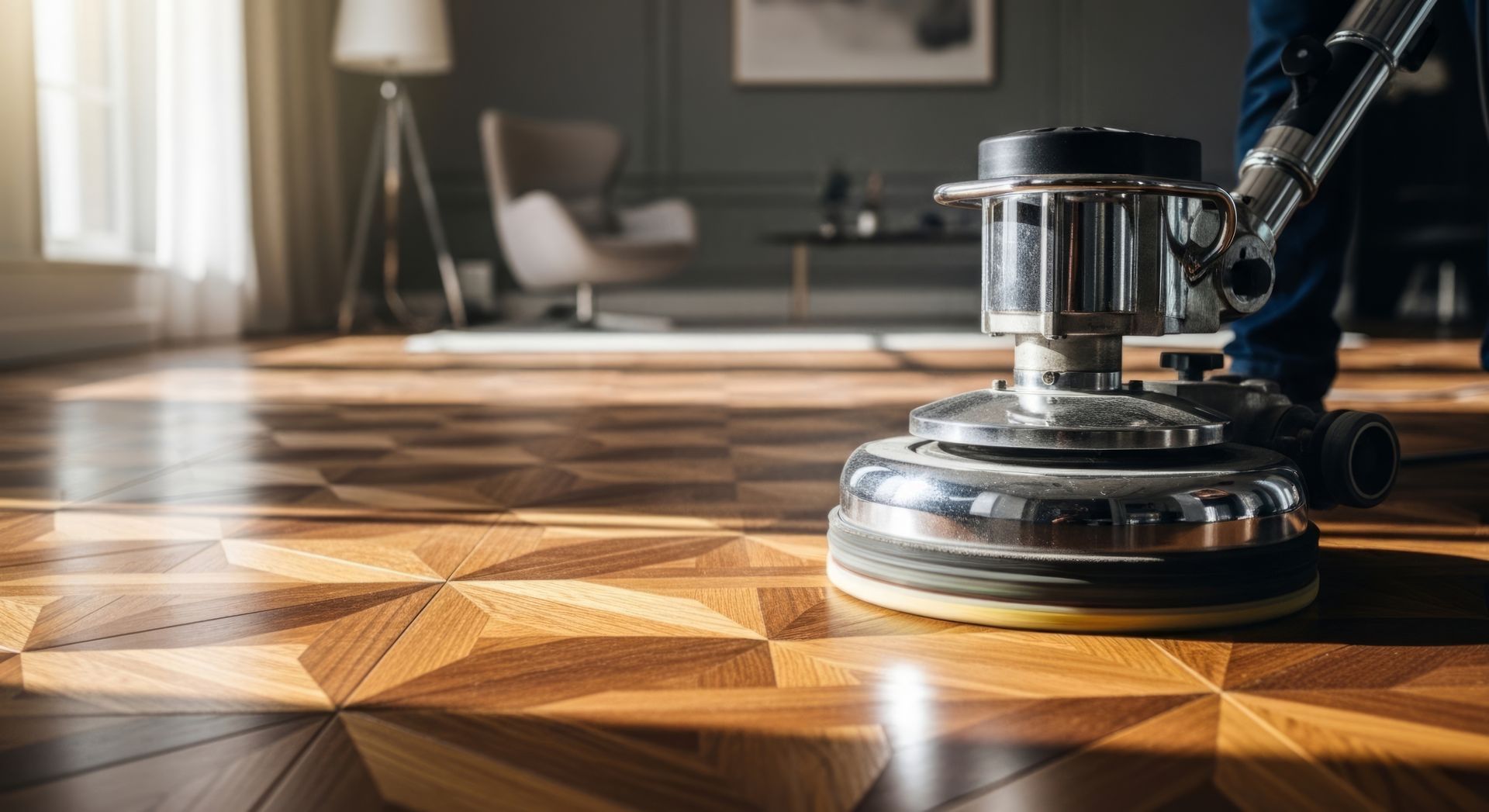
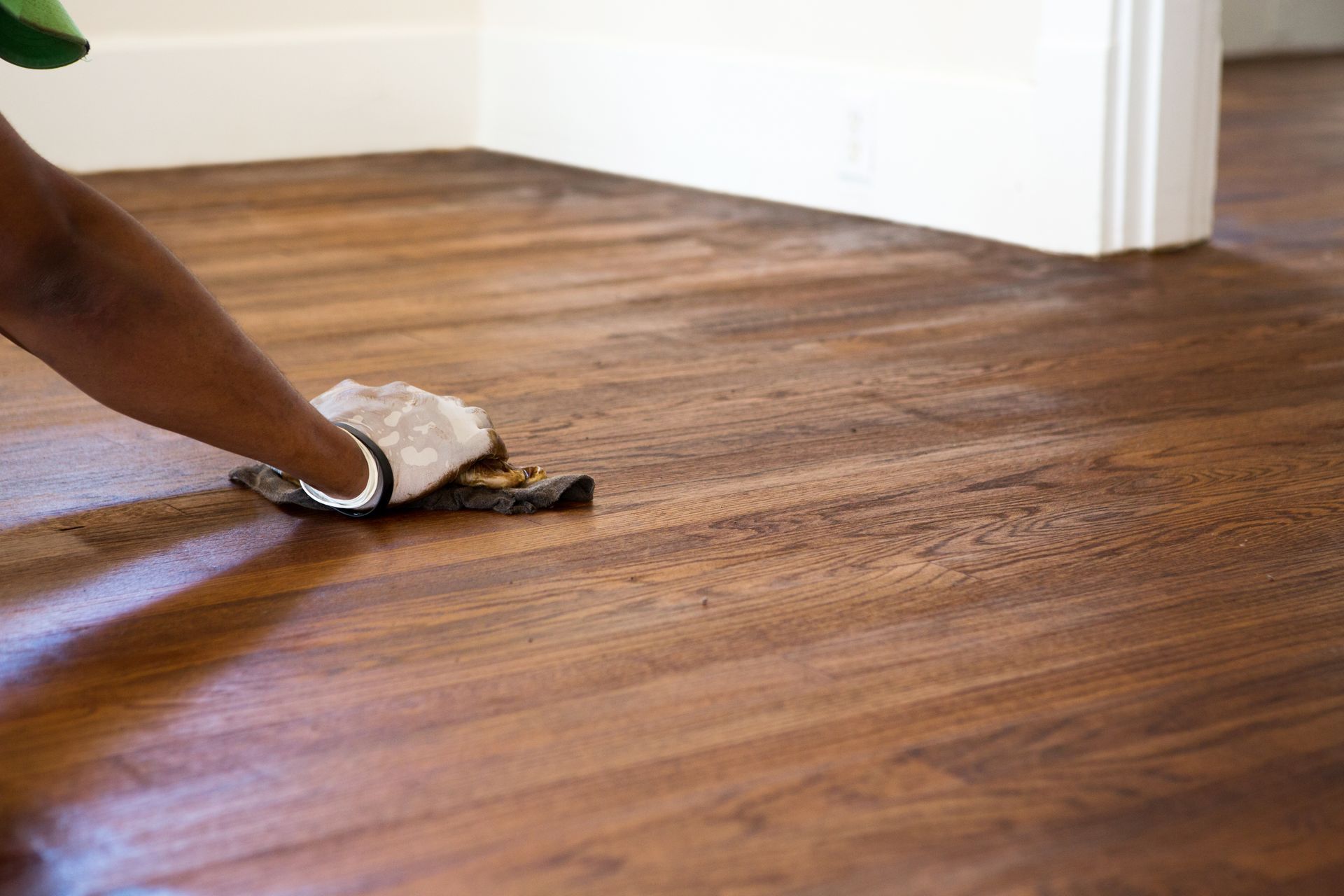
Surface-level water marks, including white rings from plant pots or glasses, are often resolved during sanding. Refinishing strips the old finish entirely, removing the discolored layer and replacing it with a fresh coat. Homeowners are frequently surprised by how well these lighter marks disappear once the floor is properly sanded and recoated.
Deeper gray or black water stains form when water has sat on unfinished wood for an extended period. Much like deep pet stains, these can penetrate below what sanding can safely reach. If the floor still has adequate thickness and the stain is not widespread, careful sanding can reduce or eliminate it. If not, board replacement followed by refinishing is the recommended approach.
Does Pennsylvania's Climate Make Water Damage More Likely?
Lehigh County communities like Macungie, Emmaus, and Lower Macungie Township experience humid summers and cold, dry winters. This seasonal cycling causes wood to expand and contract repeatedly. If moisture enters through gaps, around exterior doors, or from a crawl space or basement, it can accelerate staining and cupping. Catching the problem early gives refinishing the best chance of success.
When Refinishing Works and When It Does Not
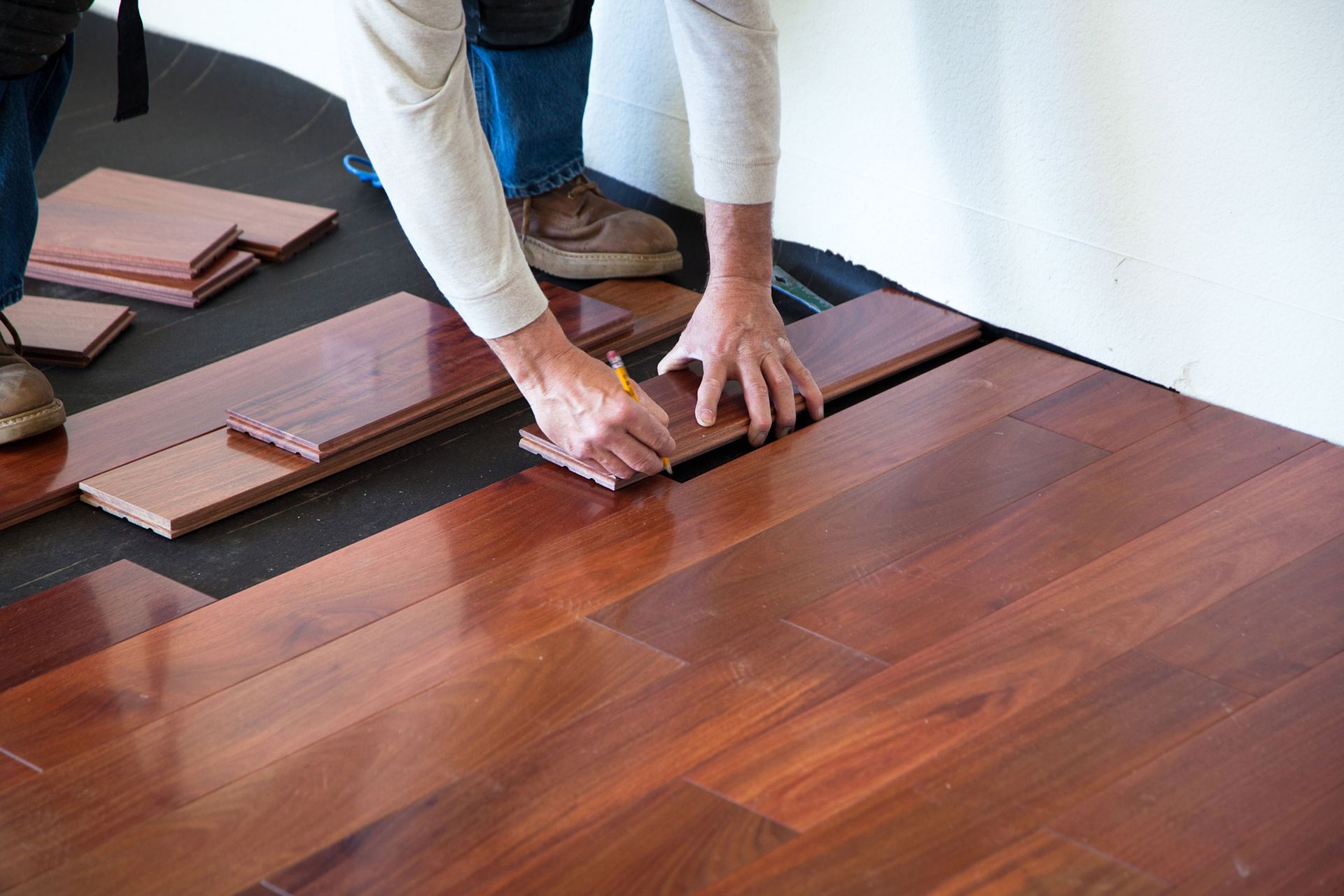
Hardwood floor refinishing is most effective when damage is limited to the top portion of the wood and boards still have enough thickness to support additional sanding. Most solid hardwood boards can be sanded multiple times over their lifespan. Engineered hardwood has a thinner wear layer, which limits how many times it can be refinished.
Stains that refinishing can often address include light to moderate pet urine discoloration near the surface, white or cloudy water rings in the existing finish layer, gray water staining that has not fully penetrated the board, and general surface darkening from age and moisture exposure.
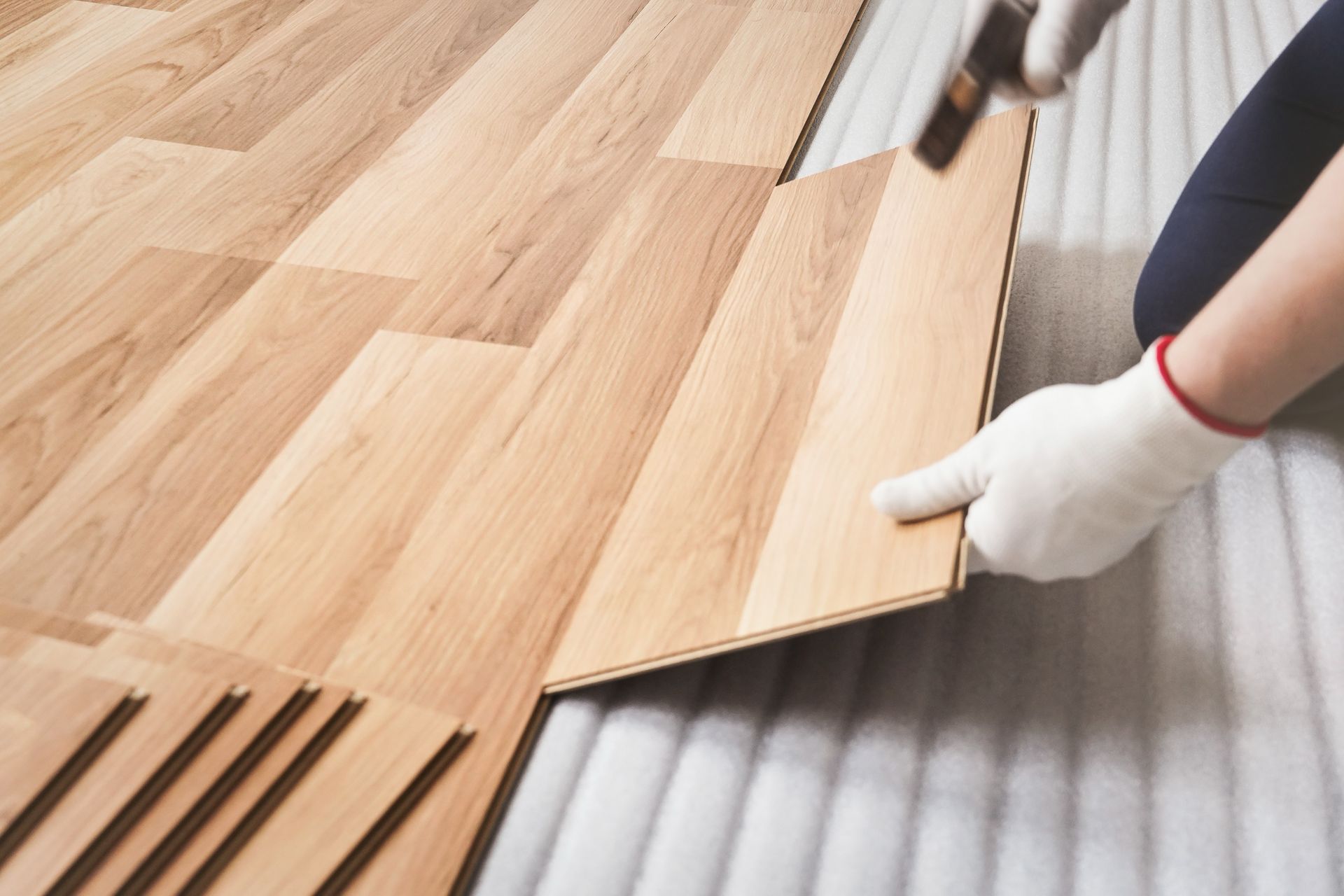
Board replacement may be needed before refinishing when black pet stain discoloration runs completely through the board, when boards have cupped or buckled from water saturation, when damage is widespread, or when an engineered board's wear layer is too thin for further sanding.
Preparing Your Home Before a Refinishing Visit
An honest conversation with your refinisher before the job begins sets expectations on both sides. When scheduling an assessment for your Macungie, PA, home, consider asking these questions:
▸ Can you assess stain depth during your visit before we commit to a scope of work?
▸ If some boards cannot be saved by sanding, do you offer board replacement as part of the same project?
▸ What finish type do you recommend for a home with pets, and how does it affect long-term stain resistance?
▸ How should I prepare the room, and how long should I plan to stay off the floors after refinishing?
Clearing the room of furniture and rugs before the technician arrives helps speed up the assessment and the work itself. Identifying problem areas in advance, such as spots under a pet's crate or near a leaking exterior door, also helps the crew plan their approach.
Connect With a Refinishing Specialist Serving Macungie, PA
If your floors have pet stains, water marks, or both, the best next step is a professional assessment. East Penn Hardwood Flooring has served Lehigh County homeowners for over six decades, with an in-house team of Master Technicians and no subcontractors on any job.
Call
(610) 366-9494 to schedule your consultation, or
contact the team online to request a free estimate. You can also find
East Penn Hardwood Flooring on Google to read reviews from neighbors throughout the Lehigh Valley.